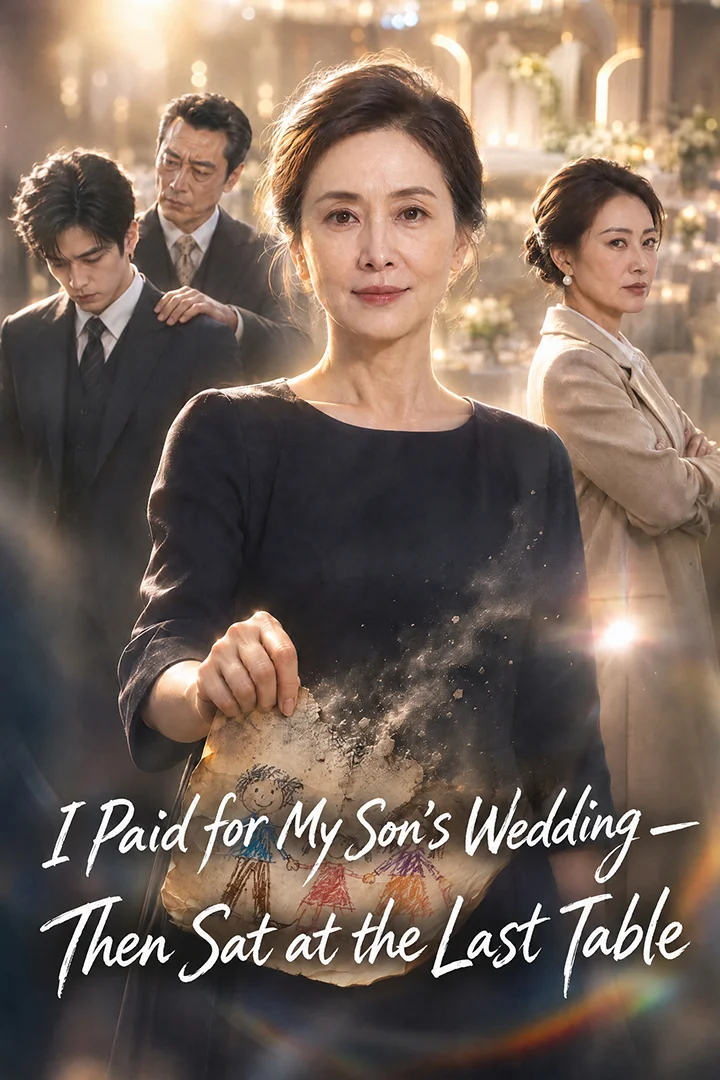
I Paid for My Son's Wedding — Then Sat at the Last Table
71 episodes · Family · Modern & Urban · Revenge & Comeback · Plot Twists & Secrets
- 0saves
- 0watches
- No ratings yet– / 10
- 🌶️–– / 5
Synopsis
Vivian Xu gave up everything for her son. At sixty-three, she sold her only home — the small apartment her late mother left behind — to scrape together $120,000 for Lucas's wedding-down payment. She thought it was her last act of motherhood. She had no idea how little it would earn her. On the day of Lucas's wedding, Vivian is seated at the very last table in the banquet hall, far from the stage. Up front, her ex-husband Victor Chen stands beside Delilah Song — the woman who once served as their family's housekeeper. Delilah smiles gracefully, accepts the tea ceremony from the newlyweds, and basks in the applause. The guests believe Delilah is Lucas's real mother. Vivian is just a stranger at the back. But the truth is buried in eighteen years of lies. When Lucas was a child, Delilah manipulated Victor into signing a custody waiver under the guise of a medical emergency. Vivian's mother suffered a brain hemorrhage and needed an urgent transfer of $30,000 to survive — but Delilah intercepted the wire transfer, letting the old woman die. Then she spread the rumour that Vivian had taken the money and abandoned her son. Victor believed it. Lucas grew up believing it. And Delilah — patient, ruthless Delilah — replaced Vivian in every role that mattered: wife, mother, matriarch. Now Lucas discovers the truth through a forgotten receipt and a chance encounter with Charlie, a warm-hearted care-home volunteer who has become Vivian's only confidante. The world shatters. Lucas sues Delilah, fights her in court, and watches her drag Victor down with her — stealing the proceeds from selling his house before fleeing the city and getting arrested. Paralyzed by a stroke, Victor begs Vivian for forgiveness. She refuses. Lucas kneels at the door of her assisted-living community, weeping, begging her to come home. Vivian doesn't slam the door. She simply presses an old gold longevity lock — a family heirloom meant for a grandchild she will never hold — into his hands. Then she turns back to her piano lesson, her part-time job coaching children from migrant-worker families, and the quiet, unbothered life she has built from nothing but her own two hands. Some mothers forgive. The strongest ones move on.
Where to watch

Top reviews
Nobody has reviewed this drama yet.
Details
- Episodes
- 71 (3 free, 68 paid)
- Status
- Completed
- Style
- Live-action · Made with AI
- Orientation
- Vertical
- Subtitles
- English
Something missing or wrong? Suggest an edit·